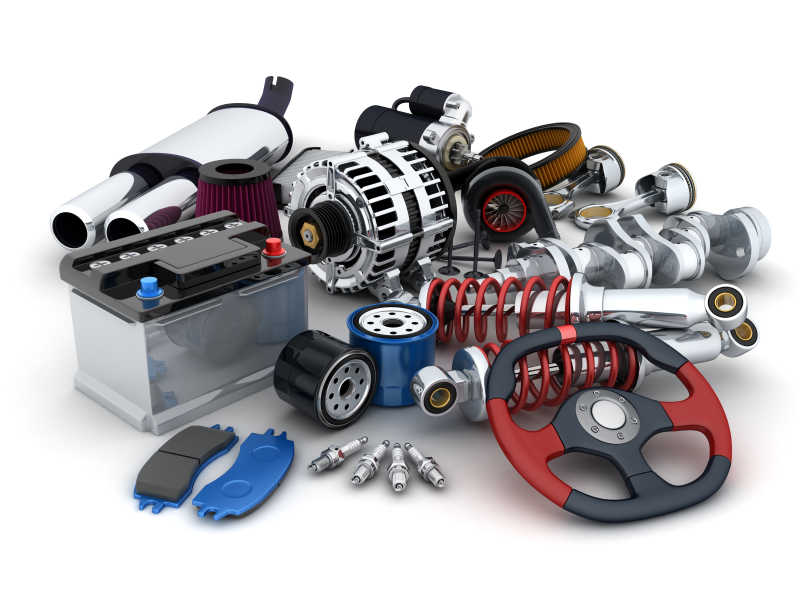
SABER certification is a mandatory compliance requirement for automotive spare parts exported to the Saudi market. Below is a systematic overview covering certification system basics, applicable product scope, requirements, detailed process, document preparation, costs, timelines, and practical recommendations.
1. What is SABER Certification?
SABER (Saudi Product Conformity Certificate) is a mandatory electronic customs clearance system launched in 2019 by the Saudi Standards, Metrology and Quality Organization (SASO). It replaced the old SASO COC certification and aims to ensure imported products comply with Saudi technical regulations.
To understand SABER, it is important to distinguish the roles: SASO is the government body that sets standards and issues Technical Regulations (TR), while SABER is the electronic platform that enforces these regulations – handling product registration, review, certificate issuance, and data integration with Saudi Customs.
As of January 1, 2025, all goods exported to Saudi Arabia must obtain both PC and SC certificates through the SABER system. The old “letter of commitment” clearance method has been completely abolished. Furthermore, SC certificates applied for after the goods have arrived at port will be considered invalid – resulting in customs clearance failure, possible fines, demurrage, and other additional costs.
2. Scope of SABER Certification for Automotive Spare Parts
Automotive spare parts fall under mandatory SABER certification. According to current Saudi regulations, the following automotive-related products require SABER certification:
| Category | Examples |
|---|---|
| Automotive safety components | Safety glass, braking systems, lighting components, seat belts |
| Wear parts | Tires, wiper blades, rearview mirrors |
| Electrical parts | Batteries (including lithium batteries, car batteries) |
| Complete vehicles & commercial vehicles | Trucks, trailers, semi-trailers (may require additional barrier certification) |
Note: Different risk levels of automotive parts may be subject to different certification models. The specific requirements must be verified on the SABER platform using the relevant product HS code.
3. Certification Process: PC + SC Certificate Two-Track System
The core SABER process consists of two stages, resulting in two types of certificates:
Stage 1: Apply for a PC Certificate (Product Certificate of Conformity)
- Purpose: Proves that a product model complies with Saudi technical regulations and standards – it is the “entry permit” for the Saudi market.
- Validity: Usually 1 year. During validity, multiple shipments of the same model do not require re-issuance.
- Applicant: The Saudi local importer registers and submits the application on the SABER system; the exporter (Chinese company) provides the required technical documents.
- Estimated processing time: Approximately 5–10 working days if documents are complete; if additional testing is required, about 2–4 weeks.
Stage 2: Apply for an SC Certificate (Shipment Certificate of Conformity)
- Purpose: Proves that a specific shipment matches the previously issued PC certificate – it is the “clearance pass” for each shipment.
- Validity: Single shipment only – must be applied for each new shipment.
- Timing: Must be applied for before the goods arrive at Saudi port.
- Estimated processing time: Approximately 1–3 working days if documents are complete.
4. Certification Models Explained
Depending on product risk level and applicable technical regulations, SABER includes several specific models:
| Model | Applicability | Key Features |
|---|---|---|
| COC (Type 1a/3) | Most regulated products (including many automotive parts) | Requires approval by a Notified Body; submission of test reports, technical files |
| SCOC | Non-regulated or low-risk products | No Notified Body approval required; importer directly applies |
| IECEE | Electronic/electrical automotive parts | Requires CB report first, then IECEE certificate, then PC certificate |
| GCC | Products covered by GCC Common Regulations (for Gulf states) | Requires GCC certificate first, then SABER registration |
| SQM | High-risk products (e.g., certain construction materials) | Requires factory audit by Saudi authorities; strictest process |
Automotive spare parts are generally subject to the COC model, but the exact model must be verified using the latest SASO Technical Regulation (TR) and the product’s HS code.
5. Required Documents
Documents for PC Certificate application (core):
- Product test report: Issued by an ISO/IEC 17025 accredited laboratory recognized by SASO, proving conformity with relevant Saudi technical standards.
- Product technical specification / user manual: Must include Arabic or Arabic-English bilingual version.
- Product photos and label photos (clear display of product appearance, nameplate, label information).
- Manufacturer’s business license and qualification documents.
- Trademark registration certificate (if applicable).
- Product certification application form (including HS code, model, specifications, etc.).
Documents for SC Certificate application:
- Valid PC certificate (mandatory prerequisite for SC application).
- Commercial invoice.
- Packing list.
- Bill of lading / airway bill.
6. Cost Reference
SABER certification costs generally include the following components (approximate CNY figures):
| Cost Item | Estimated Cost (CNY) | Remarks |
|---|---|---|
| PC registration fee | ~1,000 | Paid by importer on SABER (approx. 575 SAR + 15% VAT) |
| SC registration fee | ~800 | Paid by importer on SABER (approx. 455 SAR) |
| Test report fee | 3,000 – 8,000 | Depends on product type and required tests |
| Certification service fee (PC) | 4,000 – 6,000 | For engaging a third-party agency (optional) |
| Factory audit fee | 10,000 – 20,000 | Only for high-risk products requiring on-site Saudi inspection |
Note: These are market reference figures. Actual costs vary by product category, certification body, and scope of services.
7. Timeline Planning Recommendations
It is advisable to plan certification timelines with sufficient buffer:
| Step | Estimated Duration | Notes |
|---|---|---|
| Initial consultation & HS code confirmation | 1–2 days | Confirm applicable regulations and certification model |
| Product testing (if needed) | 2–4 weeks | Depends on product complexity and lab schedule |
| PC certificate review & issuance | 5–10 working days | Assuming complete documentation |
| SC certificate review & issuance | 1–3 working days | Required for each shipment |
| Full process (including testing) | Approx. 4–6 weeks | Start certification at least 2 months before shipment |
Important reminder (2025 rule): The SC certificate must be issued before the goods arrive at port, otherwise it is invalid and customs clearance will be denied. Exporters should closely coordinate with their Saudi importer and plan application timing accordingly.
8. Practical Recommendations & Common Considerations
1. Special note on test reports
The test report is a core document for PC certificate application. Key points:
- Must be issued by an ISO/IEC 17025 accredited laboratory recognized by SASO.
- Usually valid for 1 year – must be used within its validity.
- The report must cover all test items required by the relevant Saudi Technical Regulation (TR).
2. Labeling and manual compliance
Product packaging and manuals must meet Saudi localization requirements:
- Packaging must display Arabic warning labels and country of origin.
- Manuals must be provided in Arabic or Arabic-English bilingual.
- Non-compliant products may be detained at customs.
3. Link between PC and SC certificates
- The PC certificate is a prerequisite for applying for an SC certificate – the PC must be issued before shipment.
- Each shipment requires a new SC certificate based on a valid PC certificate.
- Ensure the PC certificate is still valid before each shipment – expired certificates will block SC issuance.
4. How to check specific product requirements
Because different automotive spare parts may be subject to different technical regulations and certification models, it is recommended to:
- Use the corresponding Saudi HS code to check specific technical requirements and risk level on the SABER official website (https://saber.sa).
- If the product falls under GCC scope (e.g., complete vehicles, certain common parts), complete GCC testing and certification first, then apply for PC certificate via SABER.
- For in-vehicle electronic/electrical parts, the IECEE/CB path may be required.
- Consult a professional third-party testing and certification body early to determine the exact certification pathway and standards for your specific product, ensuring efficient and accurate preparation.
5. Coordination with the Saudi importer
Both PC and SC certificates are applied for by the Saudi local importer. Exporters must maintain close communication:
- Assist the importer in obtaining the information needed for SABER registration.
- Provide complete technical documents promptly for submission and review.
- Jointly track the progress of certificate applications to ensure issuance before the goods arrive at port.