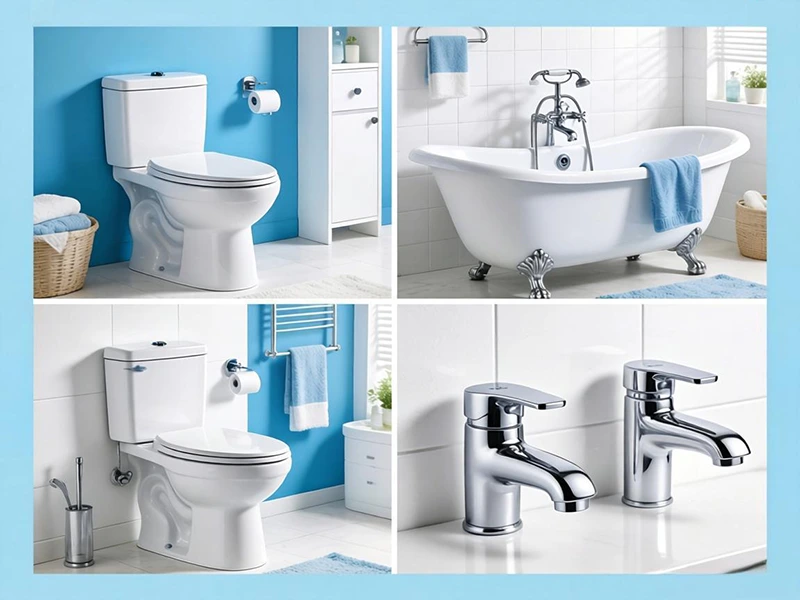
Saudi Water Efficiency Label Certification, officially known as RWC Certification (Rationalizing Water Consumption), is a mandatory requirement for sanitary ware exported to Saudi Arabia. All products covered by the regulations must pass water efficiency tests and bear the water efficiency label before they can be sold in the Saudi market.
Due to frequent updates and strict enforcement of Saudi water conservation regulations in recent years, the scope of mandatory certification continues to expand, and it is now deeply integrated into the SABER system. Compliance requirements are quite rigorous.
1. Basic Certification Information
| Item | Details |
|---|---|
| Certification Name | RWC Certification / Water Efficiency Label |
| Regulatory Authority | Saudi Standards, Metrology and Quality Organization (SASO) |
| Governing Regulation | Technical Regulation for Water Rationalization Products |
| Implementation Date | Mandatory from 1 January 2018 |
| Scope | All imported and locally manufactured sanitary products within the regulated list |
| Official Website/Platform | SABER Platform |
2. Applicable Product Scope
According to SASO, the following sanitary products are key targets for mandatory RWC certification (including but not limited to):
- Taps/Mixers: Kitchen, basin, bidet taps, shower mixers, etc.
- Showerheads: Shower nozzles.
- Water Closets (WCs): Single-flush/dual-flush western-style toilets.
- Squatting Pans.
- Urinals: Urinals with flushing systems.
- Others: Bathtubs, bidets, etc.
3. Compliance Pathway & Practical Process
As of 2025, the certification system is deeply integrated with the SABER platform. The core logic is: you must first obtain RWC certification before applying for SABER certificates needed for customs clearance. The full compliance process consists of two major steps:
Step 1: Obtain RWC Certification (Water Efficiency Label Permit)
- Sample preparation & testing: Send 2–3 samples to an SASO‑accredited laboratory for hydraulic efficiency testing.
- Obtain test report: The laboratory tests according to relevant standards (e.g., SASO 1475, SASO 2664) and issues a water efficiency test report.
- Registration application: The Saudi local importer submits the application and test report in SASO’s water efficiency product registration system.
- Review & issuance: After SASO or an authorised body reviews and approves, they issue the RWC water efficiency certificate and label.
Step 2: Apply for customs clearance certificates via the SABER platform
Only after obtaining the RWC certificate can you start the customs clearance process. The two certificates are linked – neither is valid without the other.
- Apply for PCoC: Upload the RWC certificate and other documents on the SABER platform to apply for the Product Conformity Certificate (PCoC). The PCoC is valid for one year.
- Apply for SCoC: Before each shipment, use the valid PCoC to apply for a Shipment Conformity Certificate (SCoC) on the SABER platform. The SCoC is used for clearing that specific shipment.
4. Core Technical Requirements & Rating Levels
- Control focus: Water flow rate is the key regulated parameter; products are classified into energy‑saving levels based on water flow.
- Rating system: Water efficiency levels are generally divided into A and B (from low to high), corresponding to one‑star (★) or two‑star (★★) labels. Higher water efficiency means a higher level.
- Key performance indicators (examples):
- Water‑efficient taps: Maximum flow rate not exceeding 7.5 L/min at 0.3 MPa pressure.
- Water closets: Single flush volume not exceeding 6 litres, with no residue after flushing.
5. Certificate & Label Requirements
- Certificate validity: Typically one year, requiring annual renewal. Product design changes or updates to Saudi standards may necessitate retesting.
- Label content: The label must include water efficiency level, product flow information, brand, model, country of origin, registration number, standard number, etc., and must contain an Arabic version.
- Label placement: The label must be firmly affixed to a conspicuous place on both the product itself and its packaging.
- Online sales: As of 2025, e‑commerce product pages must also display the water efficiency label prominently.
6. Costs & Timeline
| Item | Estimated Range | Notes |
|---|---|---|
| Water efficiency test fee | Approx. USD 500 – 2,000 | Depends on product complexity |
| RWC registration / annual certificate fee | Approx. USD 1,000 – 3,000 | Annual maintenance cost |
| SABER certificate fees | Varies by product category | – |
| Certification timeline | RWC: at least 2 weeks SABER‑PCoC: an additional 1–2 weeks | It is recommended that manufacturers start the process 3 months in advance |
Note: All applications must be initiated by a legally registered company (importer) inside Saudi Arabia; manufacturers cannot apply independently. Products and packaging must clearly indicate “Made in China” – abbreviations such as “PRC” are not permitted.
Professional Recommendations
- Pay attention to GSO regulations – From 1 January 2024, the Gulf Cooperation Council (GCC) has established unified water efficiency technical regulations. Entering multiple Gulf markets in the future may require simultaneous compliance with GSO requirements.
- Choose experienced partners – It is advisable to work with a competent third‑party testing and certification body that can provide full‑process support, from standard interpretation and product pre‑testing to registration and SABER platform operation.
- Regularly check official updates – SASO standards and technical regulations are updated from time to time. Regularly visit the SASO website and the SABER platform for the latest information.