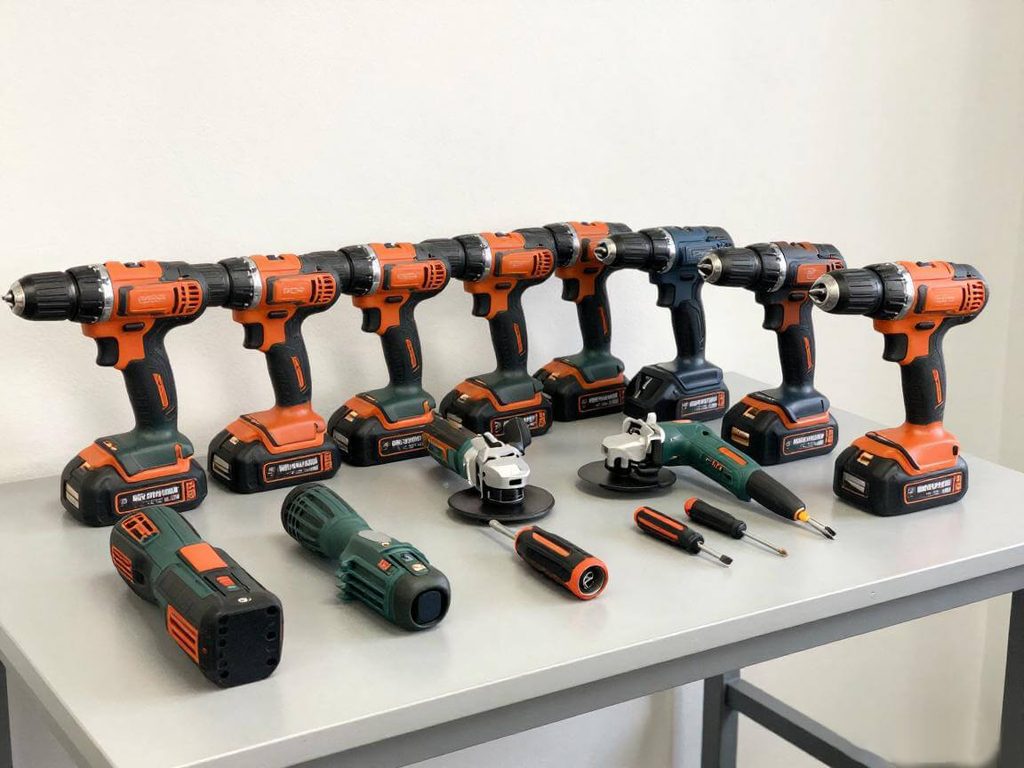
For power tools exported to Saudi Arabia, SABER certification is a mandatory pre‑clearance requirement. Shipments without valid compliance certificates will be denied entry.
It is important to note that power tools are classified as high‑risk products in Saudi Arabia, making the certification process relatively complex. The core logic is: obtain the prerequisite approvals first, then apply for the SABER certificates.
High‑Level Process Overview
Exporting power tools to Saudi Arabia generally involves these key steps:
- Obtain an IECEE Recognized Certificate (SIRC) – this is the most critical prerequisite.
- Apply for the SABER Product Conformity Certificate (PCoC) – register on the SABER platform based on the SIRC.
- Apply for the SABER Shipment Conformity Certificate (SCoC) before each shipment – this is the mandatory document for customs clearance.
Detailed Process and Requirements
1. Prerequisite Certification: IECEE Recognized Certificate (SIRC)
Almost all electric‑powered, plug‑connected, or control‑circuit‑equipped power tools are within the scope of Saudi Arabia’s IECEE regulatory list. Without a valid SIRC, the goods will be stopped at the port and cannot be cleared.
- Application basis: A valid CB Test Certificate and CB Test Report must be submitted. The standard version used in the CB report must align with the version adopted by Saudi Arabia; otherwise, the application may be rejected.
- Certificate nature: The SIRC is issued on a “model‑level” basis. Different voltage variants or models with significant cosmetic differences usually require separate applications.
2. SABER Platform Certificate Applications
After obtaining the SIRC, the following two certificates must be applied for through the Saudi SABER electronic platform:
- Step 1: Apply for the Product Conformity Certificate (PCoC)
- Purpose: It certifies that the product itself complies with Saudi technical regulations and standards. The PCoC is valid for one year.
- Action: The local Saudi importer must register and submit the application on the SABER system. You (the exporter) need to provide the SIRC, technical files, etc., to the importer.
- Step 2: Apply for the Shipment Conformity Certificate (SCoC) before each shipment
- Purpose: This certificate is for the clearance of each individual consignment and is valid per shipment.
- Action: Before each dispatch, the importer, based on the valid PCoC, uploads the commercial invoice, packing list, and other documents to the SABER system to apply for the SCoC.
Main Testing Standards
Power tools must comply with the following key standards:
| Test Category | Main Reference Standards | Critical Test Items |
|---|---|---|
| Electrical Safety | IEC 60335‑1, SASO IEC 60745 | Dielectric strength, insulation resistance, grounding continuity, leakage current, temperature rise test |
| Mechanical Performance | SASO / GCC standards | Mechanical strength (e.g., drop test), enclosure impact resistance |
| Electromagnetic Compatibility (EMC) | EN 55014 series, etc. | Radiated and conducted emission, immunity tests |
| Others (depending on product) | As applicable | Ingress protection (IP test), overload protection, etc. |
Estimated Costs and Timeline
- Costs:
- Product testing fees: Depending on the complexity of the product, typically range from USD 1,100–2,800.
- Certificate issuance fees: PCoC registration fee is about USD 40 per model; company registration fee is about USD 425. SCoC fee is approximately SAR 402.5.
- Additional charges may include inspection fees, agency service fees, etc.
- Timeline:
- Product testing: Usually takes 2‑3 weeks.
- Overall process: It is recommended to start the certification process at least 30 days before shipment to allow for possible supplementary testing or document review. Document review typically takes 3‑5 working days.
Important New Regulations and Key Reminders for 2026
- HS Code Update: The SABER platform has now adopted the 12‑digit new HS codes in line with Saudi Customs. Certificates using the old codes are no longer valid; you must use the new codes when applying.
- Special Requirements for Lithium‑Battery‑Powered Tools: For power tools containing lithium batteries, in addition to the above certifications, you must also provide a UN38.3 test report and an MSDS (Material Safety Data Sheet).
- Labeling and Instructions:
- Language: Product labels and user manuals must include an Arabic version.
- Content: Labels shall show the product name, model, voltage, country of origin, Saudi importer information, safety warnings, etc.
- Energy Efficiency Label: Under the 2023 regulations, power tools are also subject to energy efficiency label registration requirements.
- Classification Risk: Power tools with lithium batteries are likely to be classified as “dangerous goods” during declaration. Incorrect classification may result in direct detention of the shipment.
Conclusion
In short, SABER certification for power tools to Saudi Arabia involves a multi‑step, stringent process. Special attention must be paid to the IECEE (SIRC) as the prerequisite, and all documents and product markings must comply with the latest Saudi regulations. Given the complexity of the process, engaging an experienced certification agency can significantly improve efficiency.