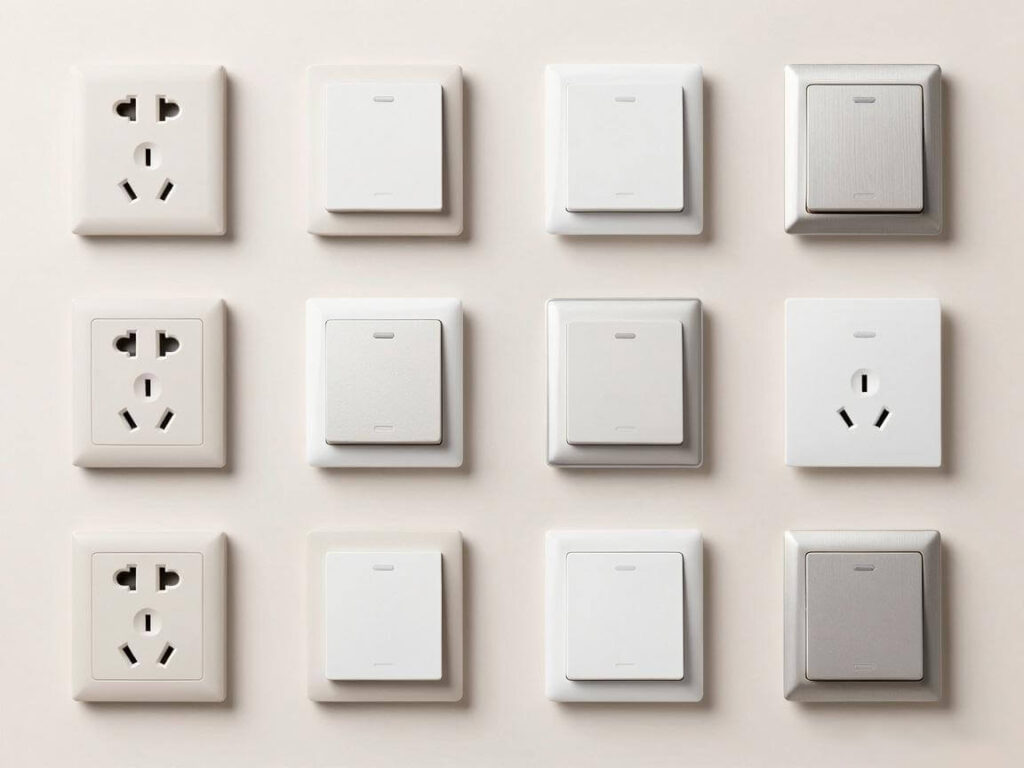
Exporting switches and sockets to Saudi Arabia requires SABER certification. This is a mandatory online system implemented by the Saudi Standards, Metrology and Quality Organization (SASO). All regulated products imported into Saudi Arabia must obtain conformity certificates through the SABER platform to clear customs successfully.
Below is a comprehensive guide to SABER certification for switch and socket products.
1. Core Certification Process
SABER certification consists of two main stages, which must be completed in order:
- Stage 1: Product Registration and PCoC Application
- Register your company account on the SABER platform (https://saber.sa) and submit product information.
- The system will assess the risk level of your product based on its category and indicate the applicable technical regulations.
- You must engage a SASO‑approved certification body (e.g., Intertek, SGS, TÜV, etc.) to conduct product testing and evaluation.
- Once the evaluation is passed, the certification body issues a Product Conformity Certificate (PCoC) on the SABER platform. This certificate is valid for one year and is a prerequisite for the subsequent shipment certificate.
- Stage 2: SCoC Application before Shipment
- Prior to each shipment, you must submit a shipment application on the SABER platform and link it to a valid PCoC.
- The platform will require you to upload documents such as the proforma invoice.
- Upon approval, the system issues a Shipment Conformity Certificate (SCoC). This certificate is mandatory for customs clearance in Saudi Arabia.
2. Applicable Technical Standards
Switches and sockets are considered regulated low‑voltage electrical equipment in Saudi Arabia and generally need to comply with the following standards:
- Primary standards:
- SASO IEC 60884‑1 – Plugs and socket‑outlets for household and similar purposes – General requirements
- SASO IEC 60669‑1 – Switches for household and similar fixed electrical installations – General requirements
These standards are largely identical to the corresponding IEC (International Electrotechnical Commission) standards.
- National deviations: The SASO versions may include additional requirements specific to Saudi Arabia, such as those addressing high ambient temperatures, humidity, and local grid characteristics. These deviations must be carefully considered during testing.
- Voltage and frequency: Saudi Arabia’s grid operates at 220‑240 V and 60 Hz, which differs from China’s 220 V / 50 Hz. Product design should confirm compatibility.
3. Required Documents for Application
When applying for the PCoC, you typically need to prepare the following documents:
- CB test report (if available, this can shorten the certification cycle)
- Product photos, labels, and packaging images
- Product specification sheet or technical data sheet
- Manufacturer information and factory audit report (if applicable)
- Other documents as required, such as a risk analysis report, etc.
4. Important Notes
- Importer responsibility: The SABER platform account must be registered and managed by a local Saudi importer, who is responsible for submitting the final applications. As the manufacturer, you need to work closely with your Saudi importer and provide all necessary technical documents.
- Product marking: The product body and its packaging must clearly display the SASO conformity mark, along with manufacturer details, model number, electrical ratings, etc.
- Energy efficiency and water efficiency: Switches and sockets generally do not fall under energy efficiency requirements. However, if your product includes additional functions (e.g., USB charging ports), it may need to comply with additional energy efficiency or safety standards.
- Certificate validity: The PCoC is valid for one year and must be renewed annually. The SCoC is valid only for the specific shipment to which it applies.
Please note: Saudi regulations and technical standards are subject to periodic updates. Before starting the formal certification process, we strongly recommend that you consult with your local Saudi importer or a professional certification body to confirm the latest scope of controlled products and current standard requirements, ensuring a smooth certification process.