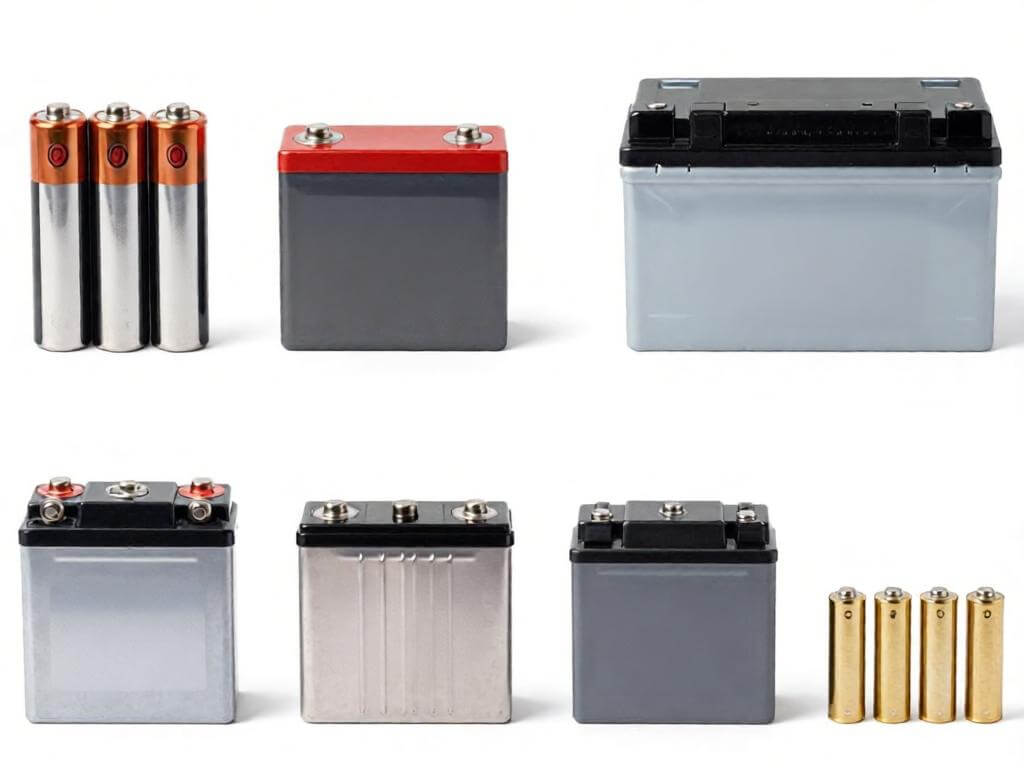
Battery products (lithium, lead‑acid, button cells) exported to Saudi Arabia must obtain SABER certification. Without a valid certificate, customs clearance in Saudi Arabia is not possible.
SABER certification actually requires two types of certificates:
- PC (Product Certificate) – for product conformity
- SC (Shipment Certificate) – for each individual shipment
Certification Paths for Different Battery Types
The requirements vary depending on the product type and risk level:
- Ordinary batteries (e.g., dry cells, general storage batteries):
The process is simpler. You can apply for the PC certificate directly on the SABER platform using an IEC test report issued by an ISO 17025‑accredited laboratory. - High‑risk / integrated batteries (e.g., batteries for mobile phones/laptops, automotive starter batteries, power banks):
A stricter procedure applies. You must first obtain an IECEE certificate. This requires a CB test report that includes Saudi national differences, and then you use that IECEE certificate to apply for the PC certificate.
Certification Procedure (for PC Certificate)
- Importer registration – The local Saudi importer creates an account on the SABER system.
- Application submission – The importer logs in and uploads the required technical documents (e.g., IEC test report or IECEE certificate).
- Review by a notified body – Choose a certification body authorised by the Saudi Standards, Metrology and Quality Organization (SASO) to review the documents.
- Factory inspection – For most battery products (nearly all categories), a video factory audit arranged by the certification body may be required.
- Payment and certificate issuance – After the importer pays the official SABER platform fees, the certification body issues the PC certificate.
About the SC Certificate (Critical Step)
For every shipment, before dispatch, you must apply for an SC certificate on the SABER system based on a valid PC certificate. This SC certificate is the “pass” for customs clearance when the goods arrive in Saudi Arabia.
Key Points to Note
- Certificate holder – The PC and SC certificates must be held by the local Saudi importer.
- Technical standards and requirements:
- Safety standards – Batteries must comply with the relevant safety standards, e.g., lithium batteries are generally tested to IEC 62133.
- Transport safety – For lithium batteries, you need to provide a UN38.3 test report and an MSDS (Material Safety Data Sheet).
- Voltage and plug – Saudi Arabia’s grid is 220V ± 10%, 60Hz; the plug must be the British Standard BS 1363 three‑pin flat plug.
- Labels and instructions – Product labels and manuals must include information in Arabic, such as product name, specifications, and country of origin.
- Time planning – It is advisable to start the certification process at least 30 days in advance to allow time for any unexpected issues.
- Document consistency – Ensure that all submitted information (e.g., model numbers, specifications) matches the actual goods exactly.
Exporting to Saudi Arabia is a complex process. It is strongly recommended to work closely with your local Saudi importer and a professional certification body to ensure full compliance.